
©Visit Éislek

Napoleonsknäppchen

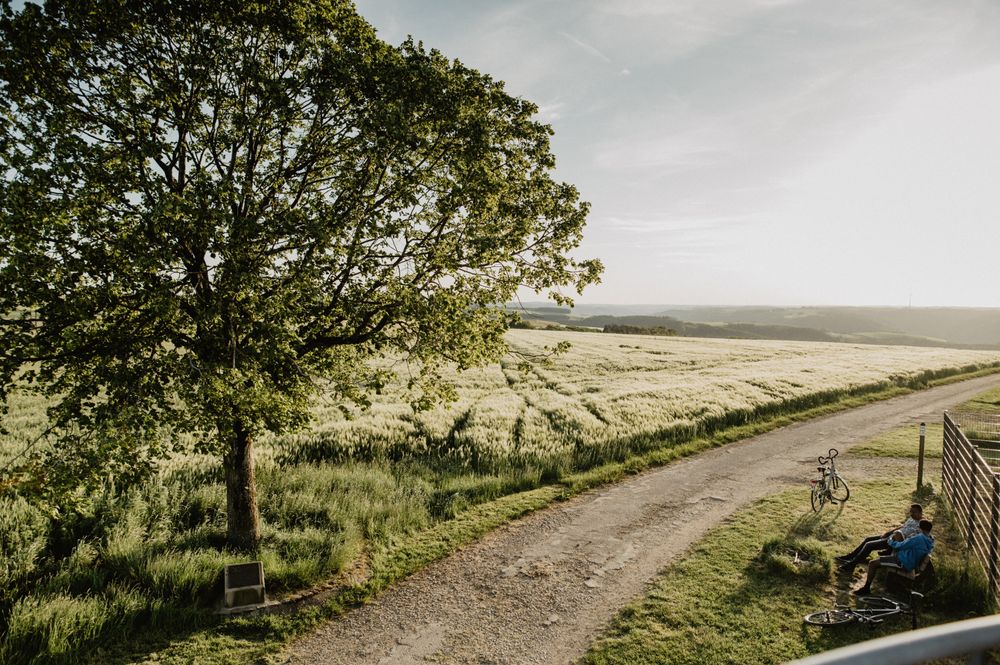
Discover the eventful history of the ‘Napoleonsknäppchen’ in Bourscheid, where a tree called ‘Napoleonsbeemchen’ was planted. The viewing platform right next to it offers an impressive view of the surrounding area.

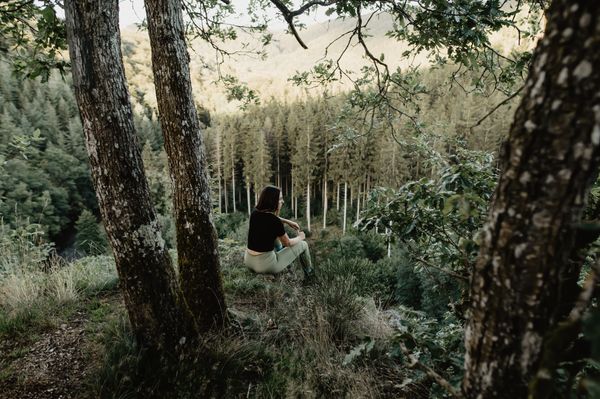
At the highest point in the municipality of Bourscheid, the ‘Napoleonsknäppchen’, a liberty tree was planted at the time of Napoleon I, which was later called the ‘Napoleonsbeemchen’. It developed into a popular vantage point, offering a panoramic view beyond the borders on clear days.

During the First World War, the tree became a makeshift observation post. German soldiers perched on a plank in the lime tree. In May 1940, shortly after the German occupation of Luxembourg, the tree was ruthlessly felled, causing resentment among the local population.

This devastation gave rise to an unexpected work. The sculptor Constant Stehres from Rollingergrund created the statue of St Willibrord from the trunk of the lime tree at the request of parish priest Victor Elz. Despite the difficulties caused by the war, the statue was solemnly placed in the Bourscheid church on 2 August 1942, thus commemorating its eventful history.

On 22 November 1941, the inhabitants of Bourscheid secretly planted a new lime tree in place of its predecessor. A memorial plaque nearby provides information about the fate of this historic tree and invites visitors to learn about the lasting legacy of the Bourscheid Napoleon tree.

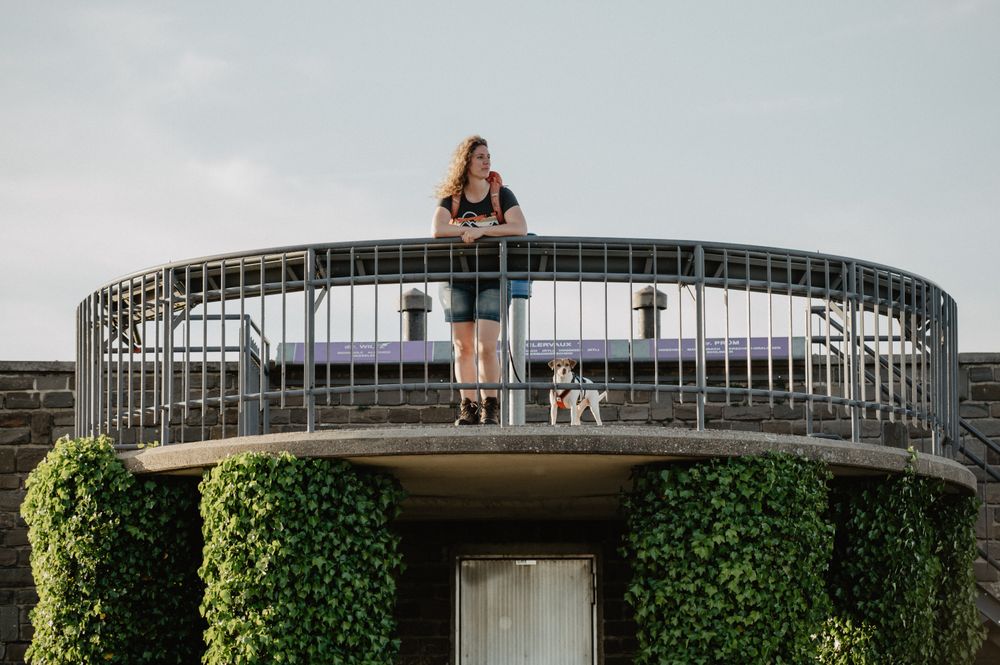
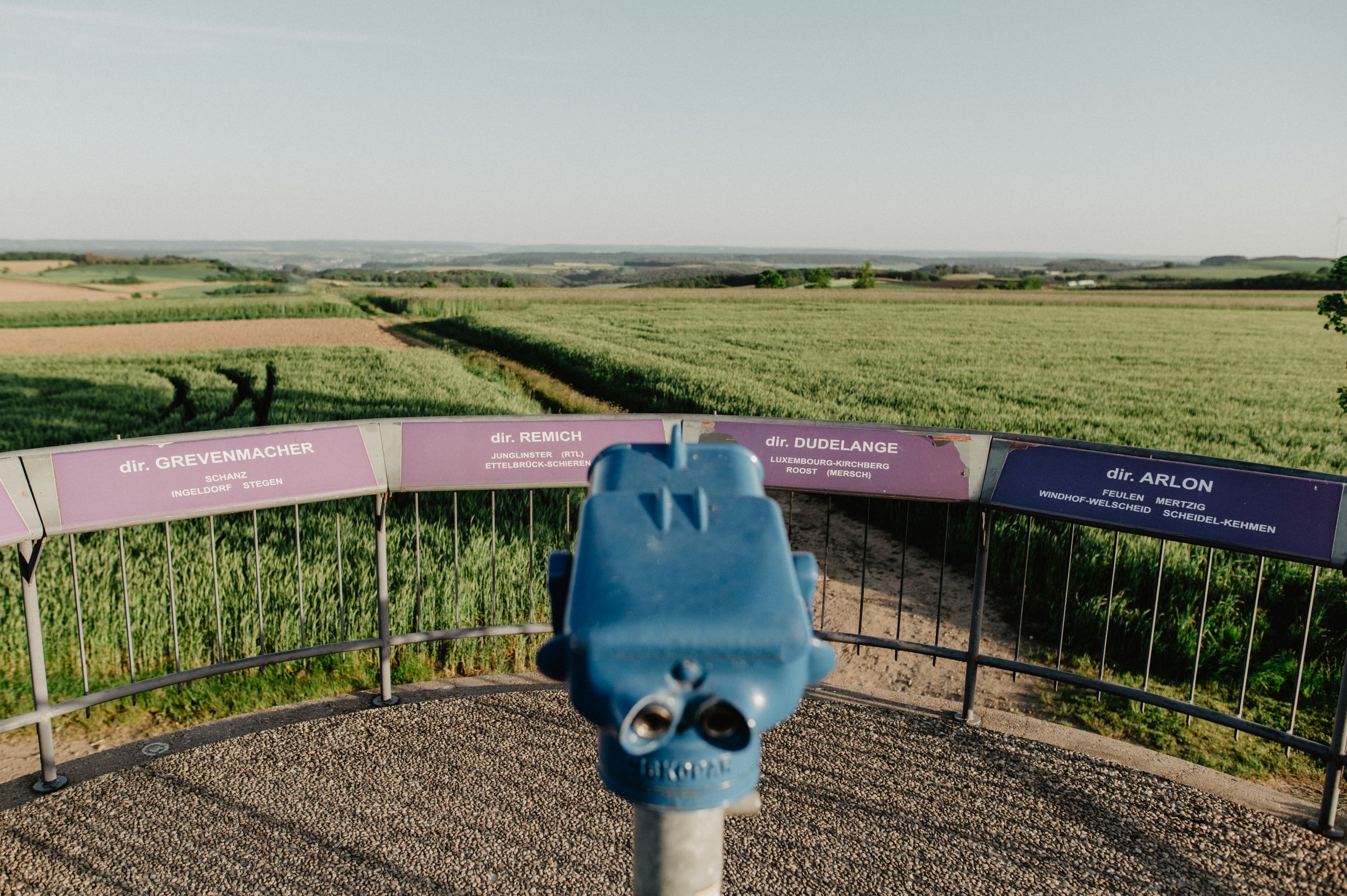
Close to the lime tree is a viewing platform with a panorama board and a telescope. From up there you can enjoy a great view of the surrounding area.

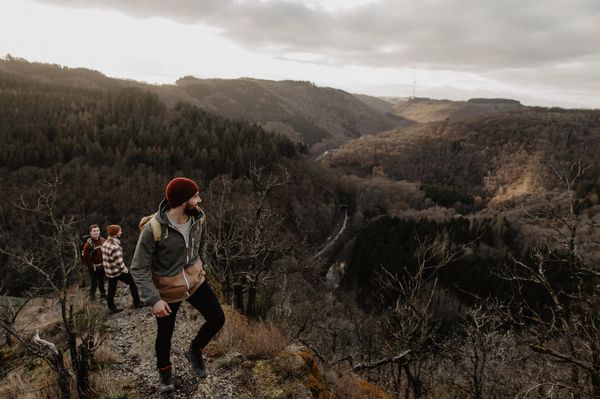
The ‘Napoleonsknäppchen’ is not accessible by car. The best way to reach it on foot is via the Escapardenne Lee Trail or the Éislek Pad Bourscheid. 
Contact

Address: Napoleonsknäppchen
L-9140 Bourscheid
Show on map

More sites

©Hotel Reiff
Hotel Reiff
WifiParkingRestaurant
©Leslie Vandenbussche | APTR
Arendt-Mangen Arthur
Wifi
©Visit Eislek
Schuttbourg Castle
Discover the historic Schüttburg in Kautenbach, which dates back to the 15th century. Note that the Schüttburg is privately owned and can therefore only be visited from the outside.
Find out more
Urban Art from Nadine Boor - Parc de l'Alzette
The artist, a resident of Ettelbruck, presents here her first work in public space. Trained in visual arts, she approaches this project as a personal and creative challenge.
Find out more
©DCK
Former village mill Weiswampach
The village of Weiswampach holds a unique place in Éislek’s history. While most mills in the region were bound by thirlage laws, forcing villagers to use a specific mill and pay fees to the local lord, the Weiswampach mill was a remarkable exception. Though the mill itself no longer stands, its story reveals the complexities of the past and the ways local circumstances could sometimes defy rigid systems.
Find out more
©Hotel Petry
Restaurant Pizzeria Petry
Rustic restaurant with wood-fired pizzeria at Hotel Petry in Vianden, offering seasonal cuisine.
Find out more
©Visit Éislek
St. Cunegonde Chapel
The St. Cunegonde Chapel in Heiderscheidergrund, a noteworthy example of 19th-century ecclesiastical historicist architecture in Luxembourg, features a neo-Gothic design, late Gothic sculptures, 18th-century statues, and glass paintings, embodying the country's historical and national consciousness as the oldest Kunigundis shrine.
Find out more
©Restaurant Chez Max
Restaurant-Brasserie Chez Max
Brasserie restaurant on two levels with seasonal cuisine, a varied menu and space for private or business events.
Find out more
©JP Ruelle
Brasserie-Restaurant Le Bohey
Cosy brasserie in Doncols serving Luxembourgish and French dishes, with easy access and an on-site drinks shop.
Find out more