
Saint-Roch church Insenborn

Where? 1, An der Gaass, L-9150 Eschdorf

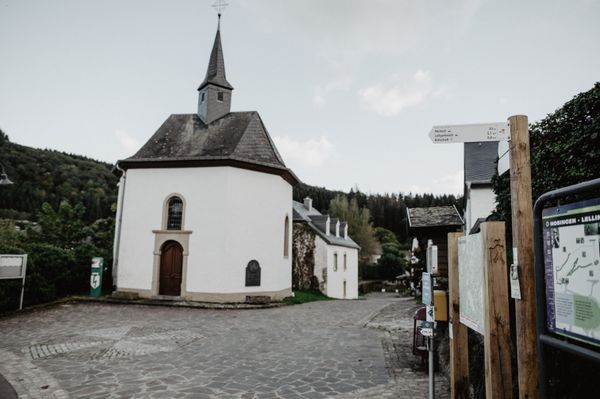
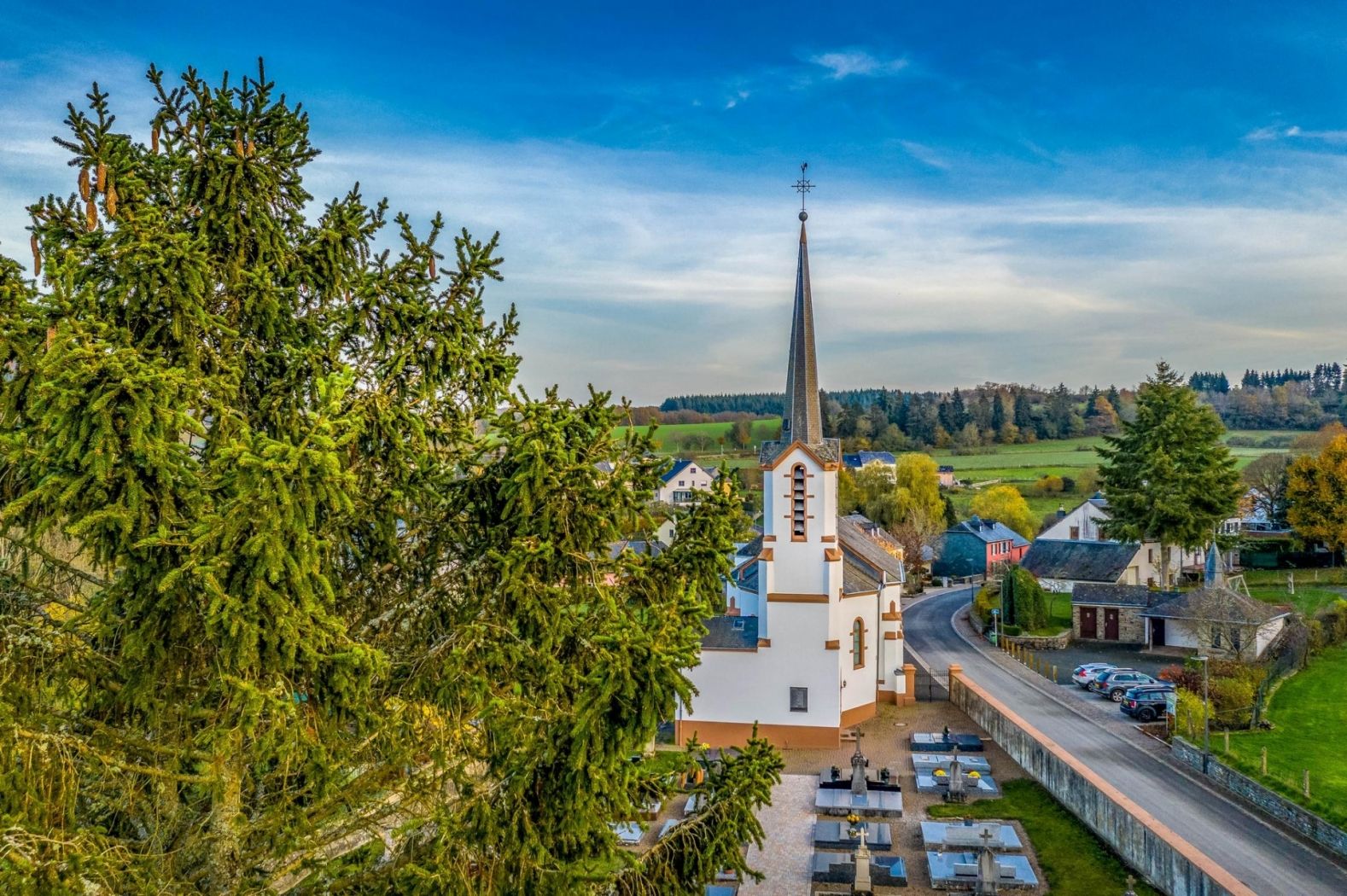
Discover the neo-Gothic splendour of the Insenborn church, built according to plans by architect Biver in 1861.

The church in Insenborn was built in the neo-Gothic style after the plan was drawn up by the architect Biver from Diekirch in 1861 and approved in January 1862. The foundation stone was laid on 12 June 1862. The building material was provided by the inhabitants, including stones from the surrounding area, house stones from Mertzig and wood from various places. The church was consecrated on 16 November of the same year. The baroque furniture was taken from the previous building, created by Jean-Georges Scholtus from Bastogne.

It is dedicated to Saint Roch. In the 20th century, the furnishings were modernised, although some statues were preserved. A second interior restoration took place in 2006, during which, among other things, the wooden benches were replaced by chairs.

Today's redesigned space includes expressive windows, new oak furniture and distinctive Stations of the Cross.

Opening hours

Contact

Address: Administration Communale d'Esch-sur-Sûre
1, An der Gaass
L-9150 Eschdorf
Show on map

More sites

©Samfaitvoyager
Bavigne dam
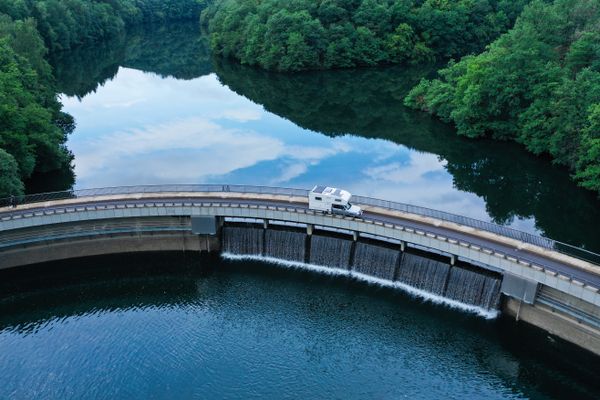
The Bavigne dam, part of the Upper Sûre reservoir, was built in the 1950s, requiring the relocation of mills and farmsteads. Standing at 23 meters, it guards the lake's pristine water quality. Today, as a popular diving spot, it unveils submerged remnants like bridges and a mill, echoing a rich history amid the progress.
Find out more
©DCK
Former village mill Weiswampach
The village of Weiswampach holds a unique place in Éislek’s history. While most mills in the region were bound by thirlage laws, forcing villagers to use a specific mill and pay fees to the local lord, the Weiswampach mill was a remarkable exception. Though the mill itself no longer stands, its story reveals the complexities of the past and the ways local circumstances could sometimes defy rigid systems.
Find out more
©Visit Éislek
Museum of the Battle of the Bulge Wiltz
Discover the moving history of the "martyr town" during the Battle of the Bulge in the interactive museum in Wiltz. Experience history up close in the beautiful Wiltz Castle.
Find out more
©Caroline Martin
Exhibition “Our Common Heritage”
An ambitious and unifying project, the exhibition “Our Common Heritage” in Boulaide takes an original and completely new approach to the history lived in the cross-border territories of the Greater Region, whose imprint still marks the current geopolitical context.
Find out more
©Visit Éislek
Church Saints-Côme-et-Damien
The parish church of Sts Côme et Damien in Clervaux, built in 1910/1911 in the Rhenish-Romanesque style, impresses with its striking dome above the altar and its majestic twin towers with melodic chimes.
Find out more
Fransiscan Church
The Franciscan church of Troisvierges is an impressive religious landmark in the heart of the town. With its imposing architecture and historic charm, the church is a place of peace and contemplation.
Find out more
©Charles Leon Mayer
Schleef Gare – Former Trainstation
Schleif: Tiny Hamlet, Big Role in the Battle of the Bulge
Find out more
©Ville d'Ettelbruck
Patton Monument Ettelbruck
Discover the Patton Memorial in Ettelbruck, an important place of remembrance. This monument honours General George Patton Jr, whose 3rd US Army liberated Ettelbruck in December 1944, stopping the invasion of the Wehrmacht during the Battle of the Bulge.
Find out more
©Industrie.lu
Antimonmine – Abandoned mine
Amidst the tranquil landscape, Goesdorf's geological tapestry reveals remnants of shafts and galleries, preserving the legacy of this "foundry village."
Find out more