
©Caroline Martin

Exhibition “Our Common Heritage”

Where? 3, rue de la Mairie, L-9640 Boulaide

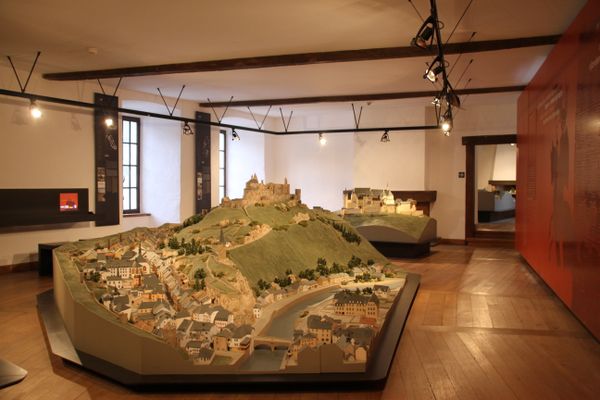
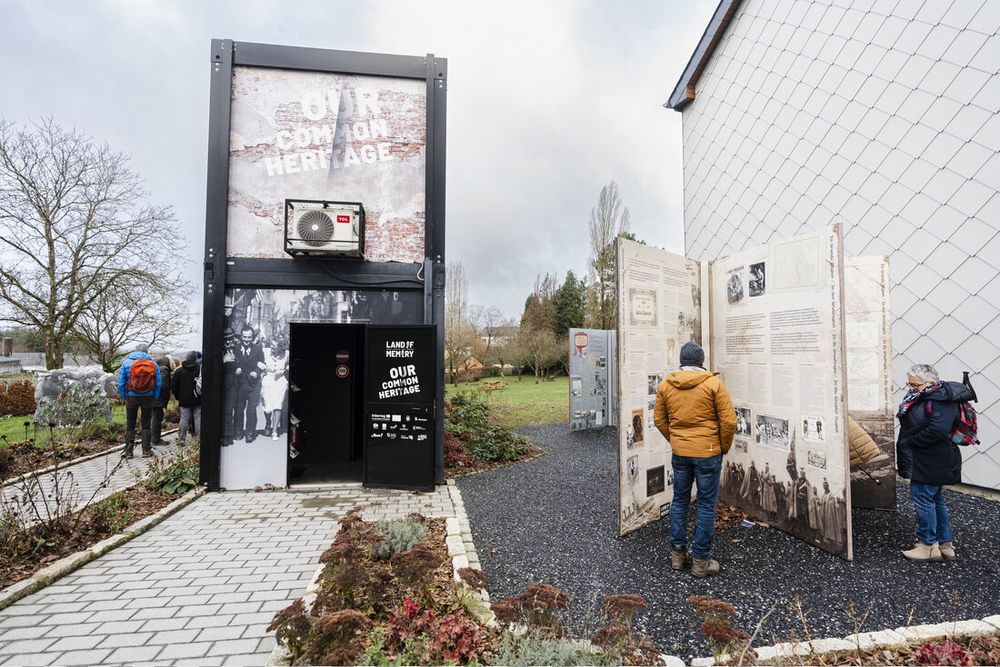
An ambitious and unifying project, the exhibition “Our Common Heritage” in Boulaide takes an original and completely new approach to the history lived in the cross-border territories of the Greater Region, whose imprint still marks the current geopolitical context.

Live our history: an immersive and participatory experience

This exhibition offers to immerse oneself in the key events of these decades of the 20th century that shaped Europe while highlighting the local history of the Greater Region whose perimeter extends over 4 countries: Belgium, Grand Duchy of Luxembourg, Germany and France.
“Our Common Heritage” thus traces the experience of the populations in the cross-border territories from the Belle Epoque to the creation of Europe. This cross-reading of our history in the Greater Region is unprecedented and original.

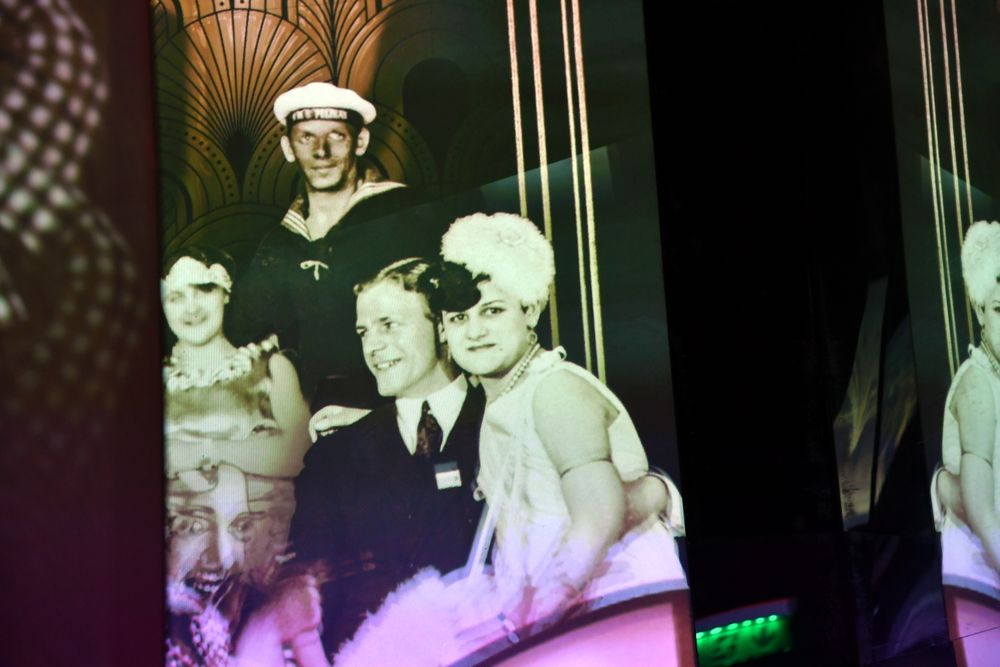
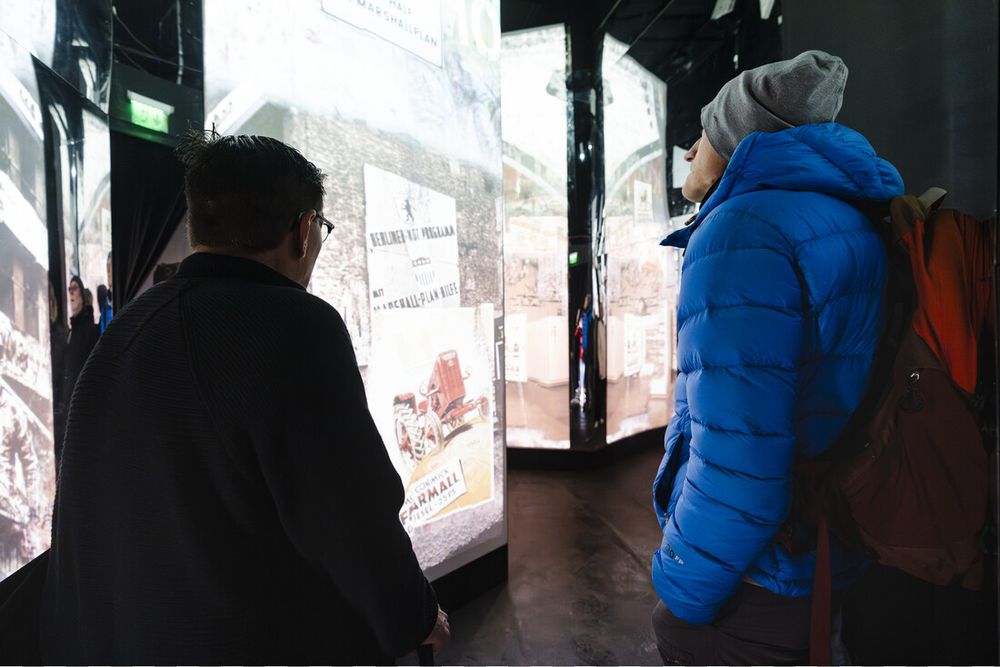
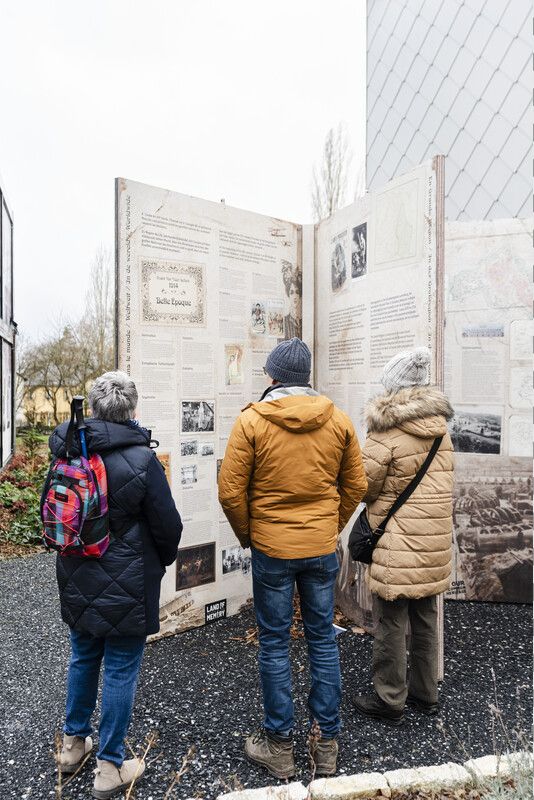
Giant photo albums provide visitors with international historical landmarks before showing how civilian and military life in the Grande Région has evolved over the decades, highlighting our similarities and differences.
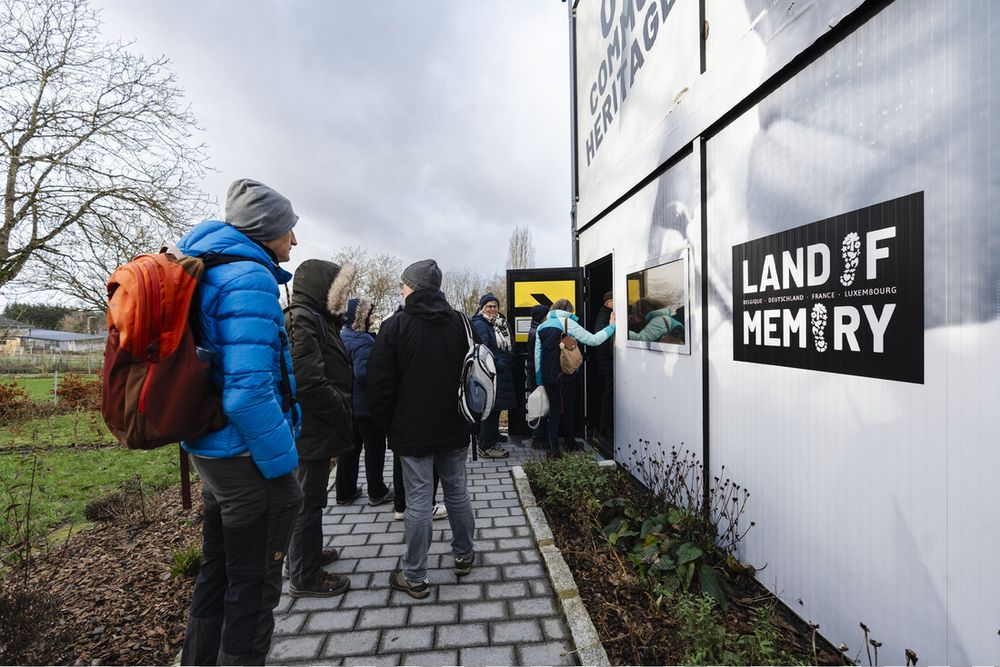
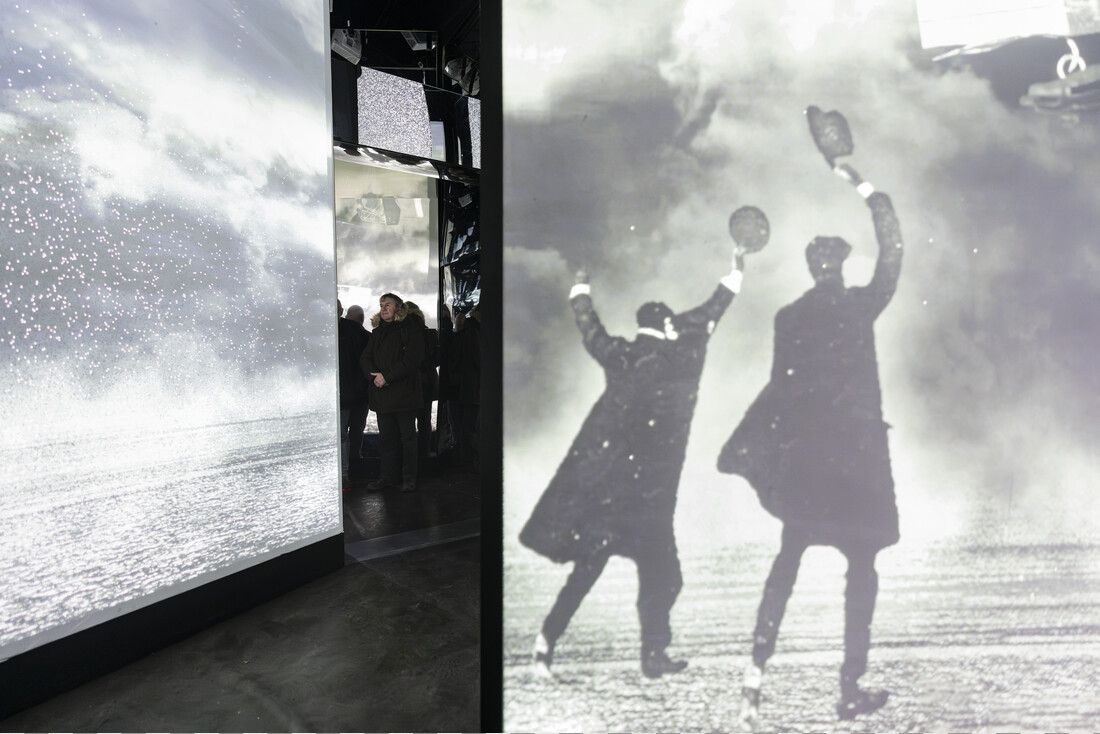
The immersive experience, offered in a converted container, gives way to strong emotion thanks to the sound and visual universe created for this extraordinary historical retrospective.

In front of the municipality, “Our Common Heritage” can be visited free of charge.
It is open from Monday to Friday from 10 am to 5 pm and from Saturday to Sunday from 10 am to 6 pm.

Opening hours

Opening hours are subject to change. Please check them before your visit in order to be sure.
Sunday07.12.2025 : 10:00 - 18:00
Monday08.12.2025 : 10:00 - 17:00
Tuesday09.12.2025 : 10:00 - 17:00
Wednesday10.12.2025 : 10:00 - 17:00
Thursday11.12.2025 : 10:00 - 17:00
Friday12.12.2025 : 10:00 - 17:00
Saturday13.12.2025 : 10:00 - 18:00

Contact

Address: Our Common Heritage
3, rue de la Mairie
L-9640 Boulaide
Show on map

More sites

©Visit Éislek
National Strike Monument Wiltz
Visit the impressive monument commemorating the general strike during the Second World War. Learn more about the tragic events of that time that shaped Luxembourg's history.
Find out more
©Tourist Center Clervaux
The Benedictine abbey of Saint-Maurice
With centuries of history and majestic architecture, the Benedictine Abbey in Clervaux invites you to immerse yourself in the past. A place full of charm and meaning, it opens its doors to visitors on the occasion of the daily morning mass.
Find out more
©Industrie.lu
Antimonmine – Abandoned mine
Amidst the tranquil landscape, Goesdorf's geological tapestry reveals remnants of shafts and galleries, preserving the legacy of this "foundry village."
Find out more
©Visit Éislek
Kalborn Mill
The mill in Kalborn, which is over 200 years old, has developed into a nature conservation centre. Endangered river pearl and brook mussels are bred here. Information boards in front of the mill show how gardens can provide habitats for wildlife and insects.
Find out more
©Ville d'Ettelbruck
Patton Monument Ettelbruck
Discover the Patton Memorial in Ettelbruck, an important place of remembrance. This monument honours General George Patton Jr, whose 3rd US Army liberated Ettelbruck in December 1944, stopping the invasion of the Wehrmacht during the Battle of the Bulge.
Find out more
©Plomm
The PLOMM children’s museum
A unique experience! The PLOMM children’s museum offers children aged zero to twelve, as well as their families and companions, a wide range of exhibitions and studios.
Find out more
©Visit Éislek
Airmen's monument
Take a journey into the past to the airmen's memorial in Maulusmühle. The wreckage of the aircraft on the ground tells the tragic story of six American airmen who lost their lives during the Battle of the Bulge.
Find out more
©Alfonso Salgueiro
Lancaster Memorial Weiswampach
The Lancaster Memorial commemorates fourteen young men whose Lancaster bombers crashed near Weiswampach during the Second World War.
Find out more
©Visit Éislek
Bunker Kaundorf
This bunker from World War II, where deserted forced conscripts hid until liberation, can be reached via an approx. 1 km-long footpath. The walk is well worth it, as hikers near the bunker are rewarded by an impressive view over the Upper Sûre Lake.
Find out more