
©Visit Éislek

Church Saints-Côme-et-Damien

Where? 6, Montée du Château, L-9710 Clervaux

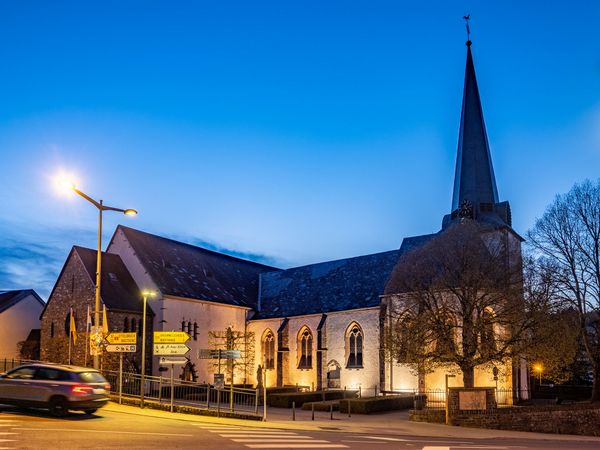
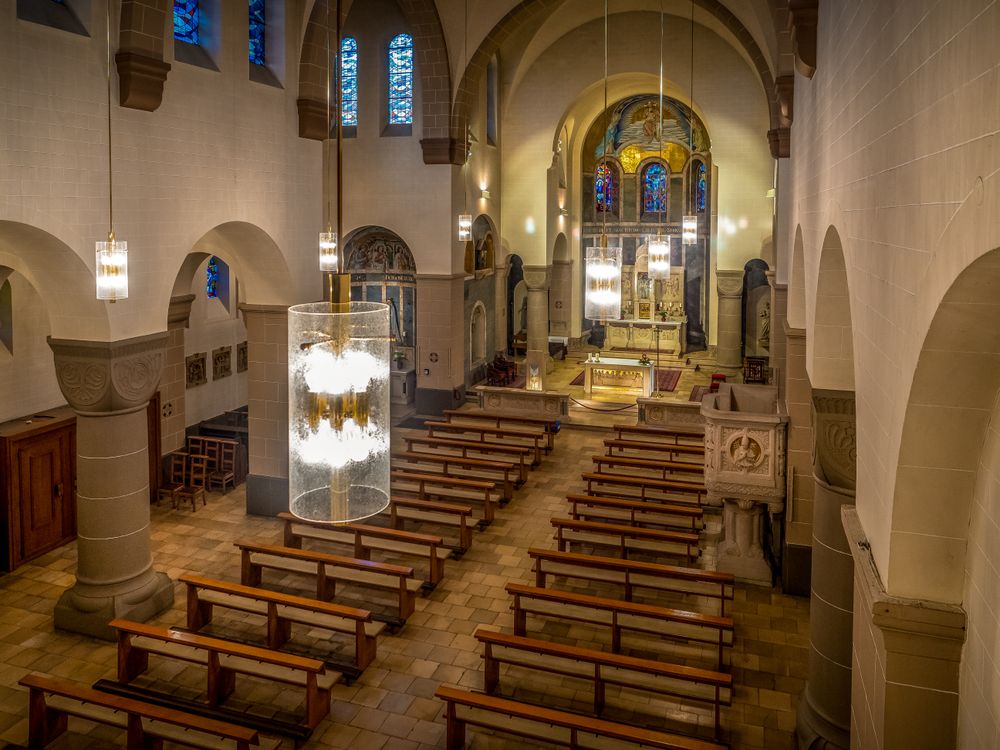
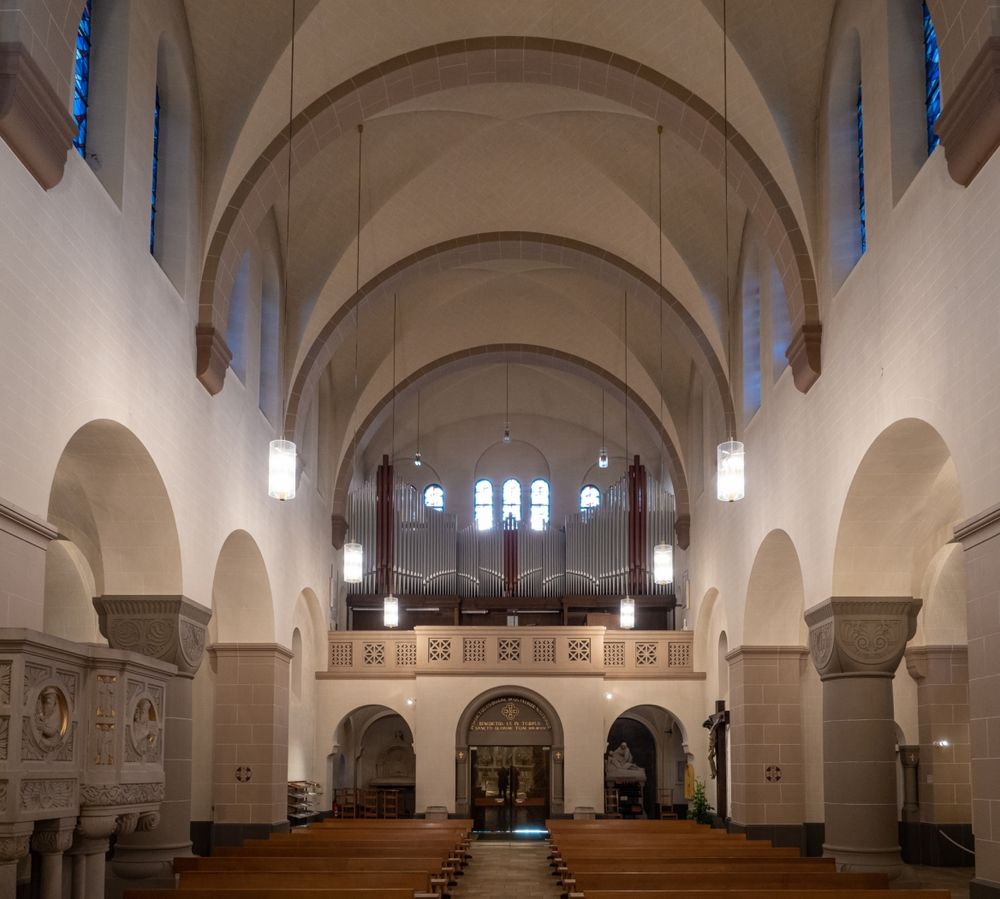
The parish church of Sts Côme et Damien in Clervaux, built in 1910/1911 in the Rhenish-Romanesque style, impresses with its striking dome above the altar and its majestic twin towers with melodic chimes.

The church building combines harmonious proportions both outside and inside and is characterised by Original Christian symbols. Its exterior design with the dominant twin-tower façade surrounded by smaller towers gives the building a charming appearance. The basilica-like layout, quarry stone from the Ardennes and ornate mosaics give the church a significant historical presence. 

Inside, works by Lambert Piedboeuf, including the impressive mosaic in the choir room, create a spiritual atmosphere. The ornate stained glass windows were recreated by Gustav Zanter after the fighting in the Second World War. The organ and bells add to the impressive heritage of this church."

Opening hours

Opening hours are subject to change. Please check them before your visit in order to be sure.
Monday27.04.2026 : 09:00 - 18:30
Tuesday28.04.2026 : 09:00 - 18:30
Wednesday29.04.2026 : 09:00 - 18:30
Thursday30.04.2026 : 09:00 - 18:30
Friday01.05.2026 : 09:00 - 18:30
Saturday02.05.2026 : 09:00 - 18:30
Sunday03.05.2026 : 09:00 - 18:30

Contact

Address: Administration Communale de Clervaux
6, Montée du Château
L-9710 Clervaux
Show on map

More sites

©Jängel Klasen
Veiner Gare – Former Trainstation
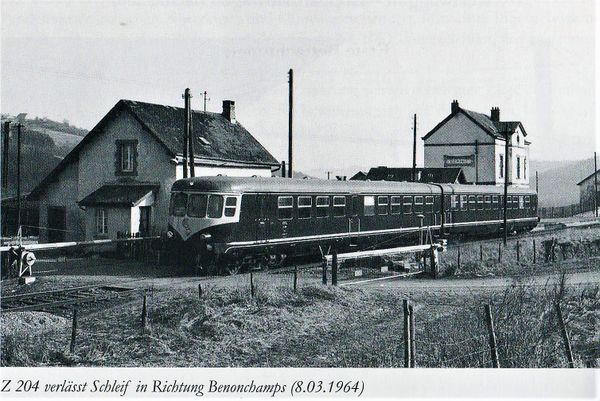
Nestled along the River Our, the town of Vianden once boasted a unique railway connection – the "Benny Express." This narrow-gauge line operated from 1889 to 1948, linking Vianden with Diekirch's main railway, a vital step in making the town more accessible to tourists.
Find out more
©Syndicat d'Initiative Stolzemburg
Putscheid Stolzebuerger Schlass – Former Castle
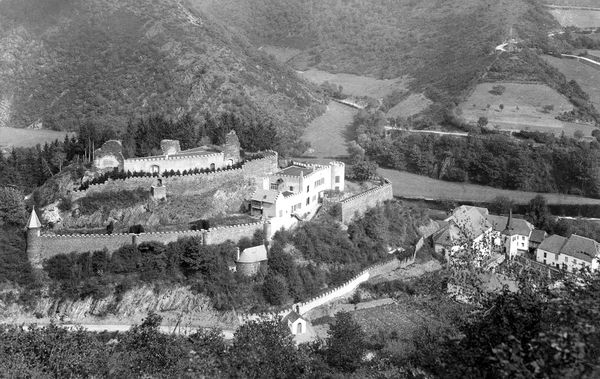
Stolzembourg Castle, rooted in history since 1192, witnessed destruction in 1454 and 1679 before being revitalized with a Scottish-style manor house in 1898.
Find out more
©Visit Éislek
Bunker Kaundorf
This bunker from World War II, where deserted forced conscripts hid until liberation, can be reached via an approx. 1 km-long footpath. The walk is well worth it, as hikers near the bunker are rewarded by an impressive view over the Upper Sûre Lake.
Find out more
©Anabela and Jorge Valente diariesof
Bildchen Chapel
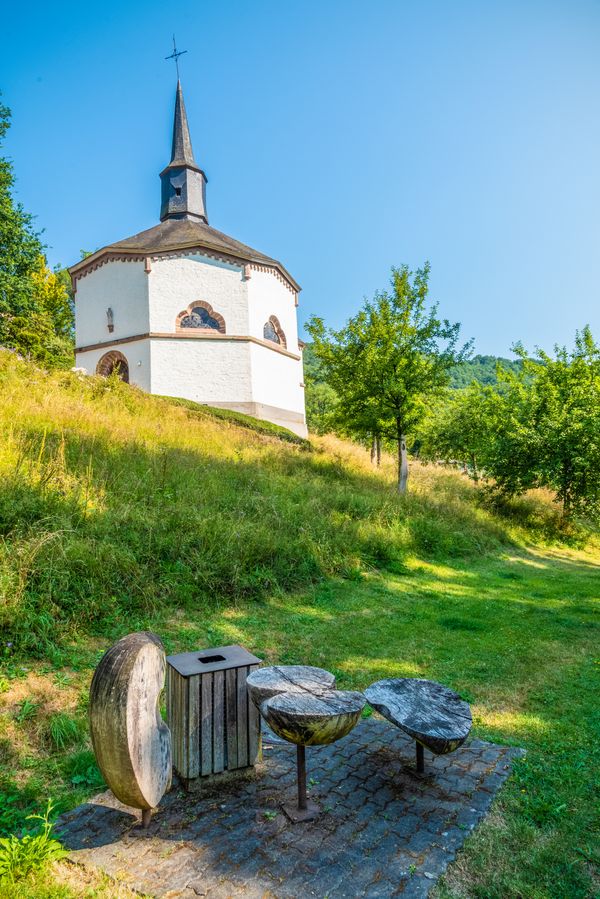
The Bildchen Chapel in Vianden is located at a pilgrimage site above the reservoir of the pumped storage plant and is worth a visit because of its idyllic location.
Find out more
©Samfaitvoyager
Bavigne dam
The Bavigne dam, part of the Upper Sûre reservoir, was built in the 1950s, requiring the relocation of mills and farmsteads. Standing at 23 meters, it guards the lake's pristine water quality. Today, as a popular diving spot, it unveils submerged remnants like bridges and a mill, echoing a rich history amid the progress.
Find out more
©Naturpark Oewersauer, Naturpark Oewersauer
Circular routes
Schumannseck 1944-1945 Memorial Path
Distance: 3,09 km
Duration: 0:50 h
Difficulty: easy
Find out more
©Ville d'Ettelbruck
Patton Monument Ettelbruck
Discover the Patton Memorial in Ettelbruck, an important place of remembrance. This monument honours General George Patton Jr, whose 3rd US Army liberated Ettelbruck in December 1944, stopping the invasion of the Wehrmacht during the Battle of the Bulge.
Find out more
©DCK
Former village mill Weiswampach
The village of Weiswampach holds a unique place in Éislek’s history. While most mills in the region were bound by thirlage laws, forcing villagers to use a specific mill and pay fees to the local lord, the Weiswampach mill was a remarkable exception. Though the mill itself no longer stands, its story reveals the complexities of the past and the ways local circumstances could sometimes defy rigid systems.
Find out more
©Visit Éislek
Memorial Site Schumann's Eck
At the strategic road junction "Schumannseck", the most murderous position war raged for weeks during the Battle of the Bulge. Today, the 1944-1945 Liberation Memorial stands here in the spirit of reconciliation and understanding between peoples as a memorial against war in the world.
Find out more