
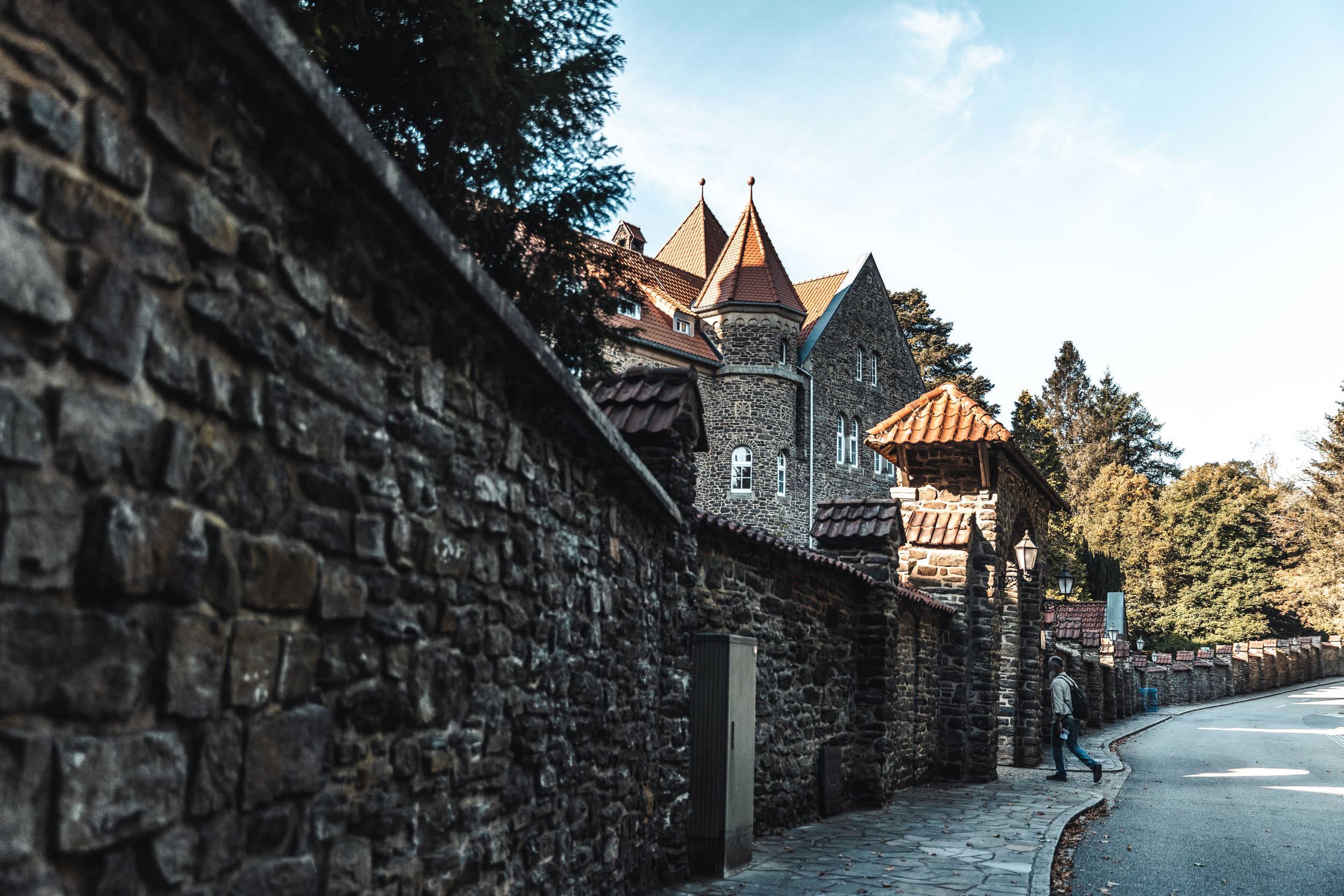
©Tourist Center Clervaux

The Benedictine abbey of Saint-Maurice

Where? 1, Place de l'abbaye, L-9737 Clervaux

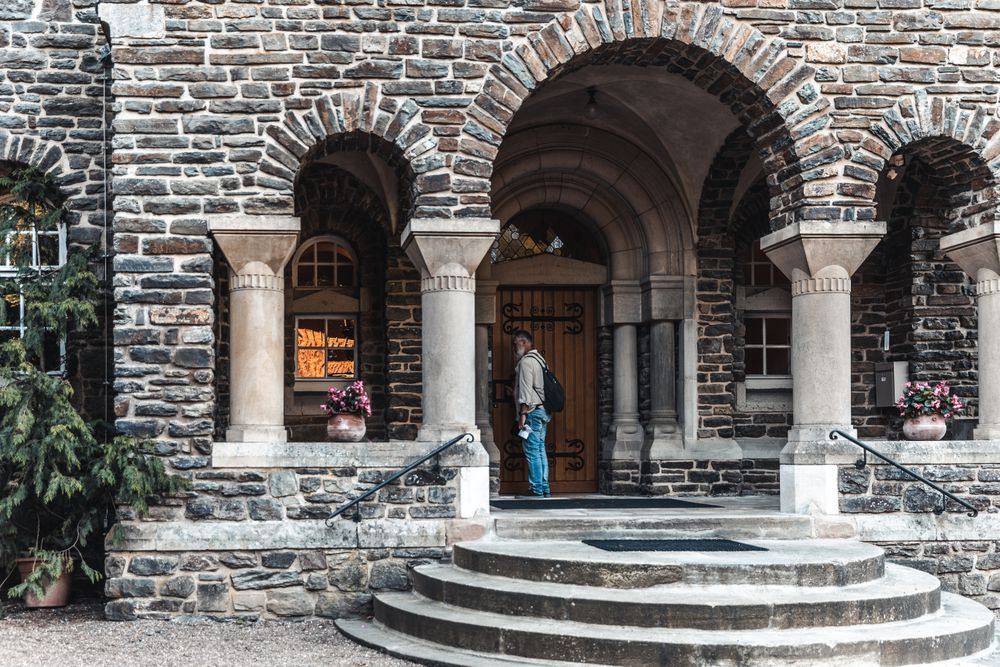
With centuries of history and majestic architecture, the Benedictine Abbey in Clervaux invites you to immerse yourself in the past. A place full of charm and meaning, it opens its doors to visitors on the occasion of the daily morning mass.

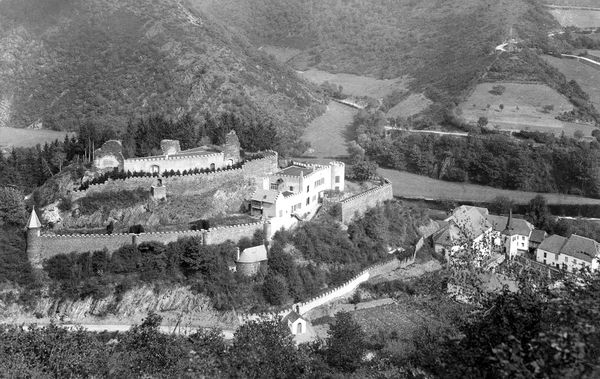
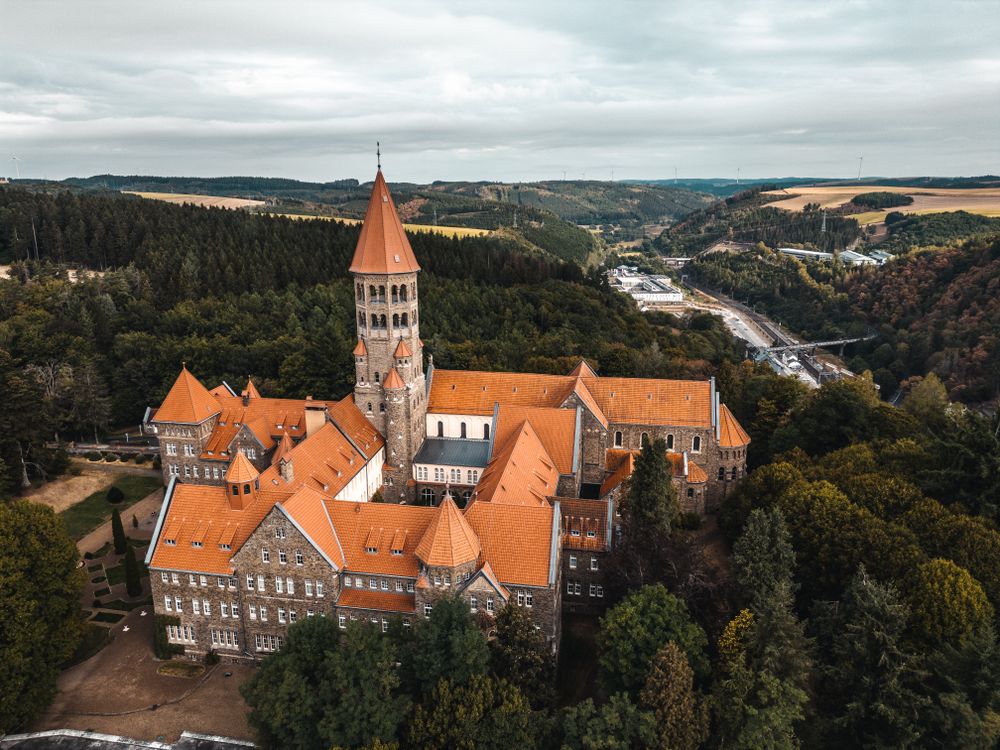
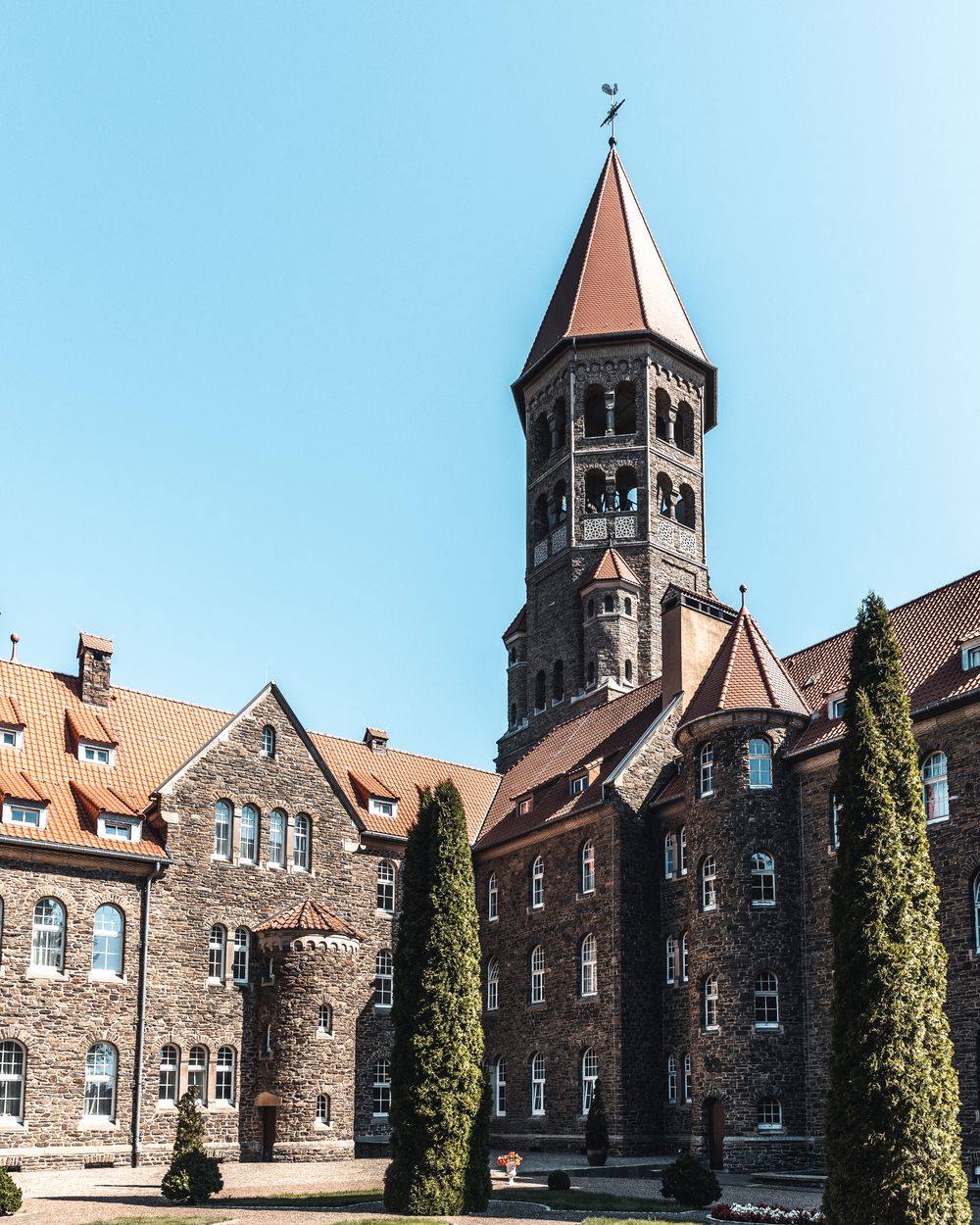
The Benedictine Abbey of St Mauritius towers with its bright red roofs over the city of Clervaux. Built in 1909/1910 in the neo-Romanesque style, it was settled by the Benedictines of the French Abbey of St-Maur de Glanfeuil.

Today the abbey houses about 12 monks and is not open to visitors.

An interesting exhibition in the crypt shows monastic life, and the daily morning mass at 10:00 am in the church offers the opportunity to listen to the monks’ Gregorian chants.  

The adjacent souvenir shop sells books and art objects as well as on site homemade apple juice.

Opening hours

Contact

Address: Die Benediktinerabtei Saint-Maurice
1, Place de l'abbaye
L-9737 Clervaux
Show on map

More sites

©Commune de Troisvierges
Troisvierges Trainstation
Troisvierges Station's story mirrors a dynamic era in European history. From a modest border stop, it transformed into a vital transportation hub, only to witness the turmoil of war and the gradual shift toward quieter days.
Find out more
©Visit Clervaux
free
with theLuxembourgPass
Museum Bataille et Châteaux - Battle of the Bulge and castle models
Treat yourself to a journey into the past and into other dimensions! This unique exhibition is suitable for young and old alike. Here you can discover history in a new way.
Find out more
©Visit Éislek
B-17 Bouncing Betty – Plane crash
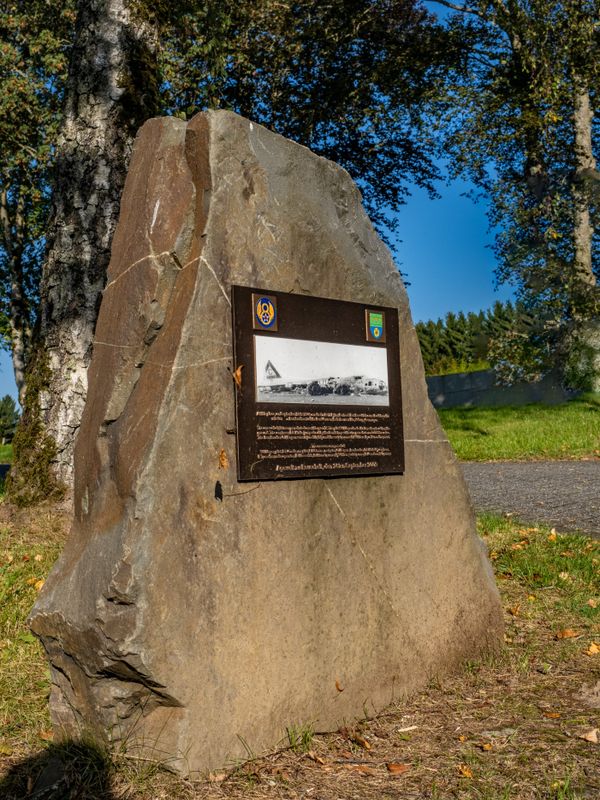
The Bouncing Betty's Fateful Day in Boulaide
Find out more
©DCK
Former village mill Weiswampach
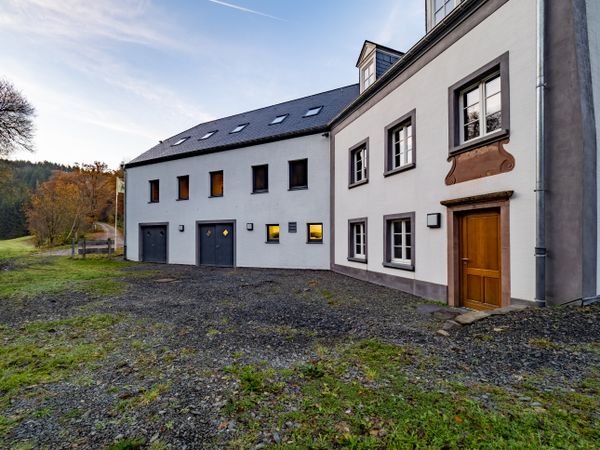
The village of Weiswampach holds a unique place in Éislek’s history. While most mills in the region were bound by thirlage laws, forcing villagers to use a specific mill and pay fees to the local lord, the Weiswampach mill was a remarkable exception. Though the mill itself no longer stands, its story reveals the complexities of the past and the ways local circumstances could sometimes defy rigid systems.
Find out more
©Visit Éislek
St. Cunegonde Chapel
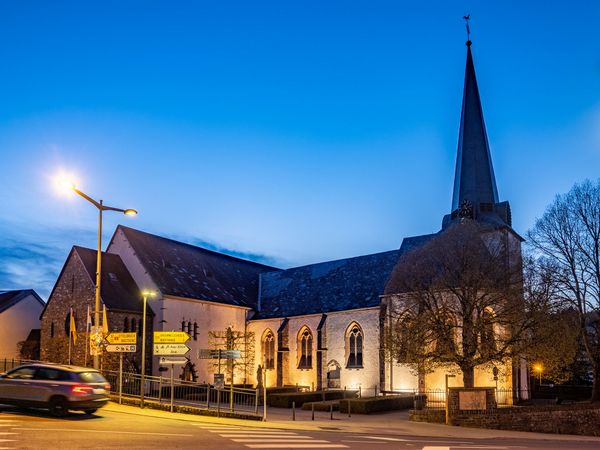
The St. Cunegonde Chapel in Heiderscheidergrund, a noteworthy example of 19th-century ecclesiastical historicist architecture in Luxembourg, features a neo-Gothic design, late Gothic sculptures, 18th-century statues, and glass paintings, embodying the country's historical and national consciousness as the oldest Kunigundis shrine.
Find out more
©Samfaitvoyager
Bavigne dam
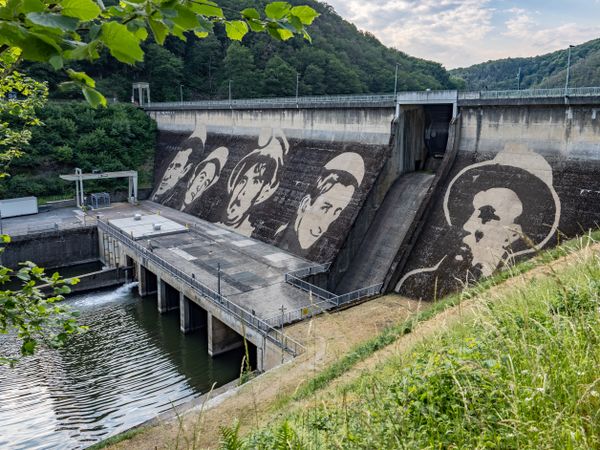
The Bavigne dam, part of the Upper Sûre reservoir, was built in the 1950s, requiring the relocation of mills and farmsteads. Standing at 23 meters, it guards the lake's pristine water quality. Today, as a popular diving spot, it unveils submerged remnants like bridges and a mill, echoing a rich history amid the progress.
Find out more
©Visit Éislek
free
with theLuxembourgPass
General Patton Memorial Museum
The General Patton Memorial Museum in Ettelbruck commemorates the commander of the 3rd US Army whose troops liberated the town on 25 December 1944. The exhibition illustrates the most important events that occurred during the Second World War in Luxembourg.
Find out more
©Visit Éislek
Church Saints-Côme-et-Damien
The parish church of Sts Côme et Damien in Clervaux, built in 1910/1911 in the Rhenish-Romanesque style, impresses with its striking dome above the altar and its majestic twin towers with melodic chimes.
Find out more
Përmeshaff – Estate ruins
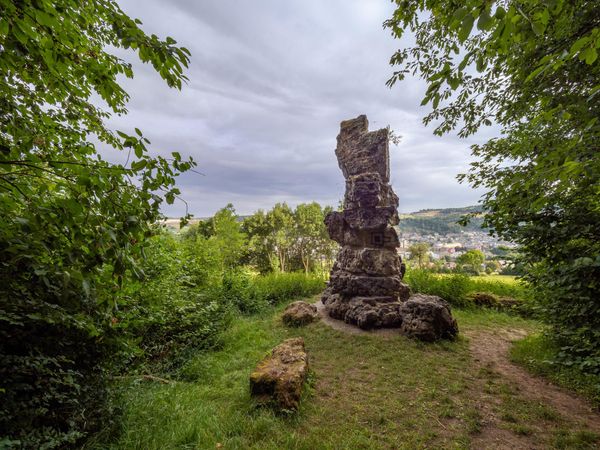
Përmeshaff, a historic site near Kaundorf, traces its roots to 1195. Over the centuries, it evolved into a religious centre, attracting pilgrims to its chapel and healing springs. Despite enduring a devastating fire in 1936, recent archaeological efforts have unveiled layers of its rich history, highlighting significance of Përmeshaff as a cultural landmark.
Find out more